
Jaisalmer Fort: History, Timings, Ticket Price, Palace Museum & Complete Visitor Guide (2026)
Introduction
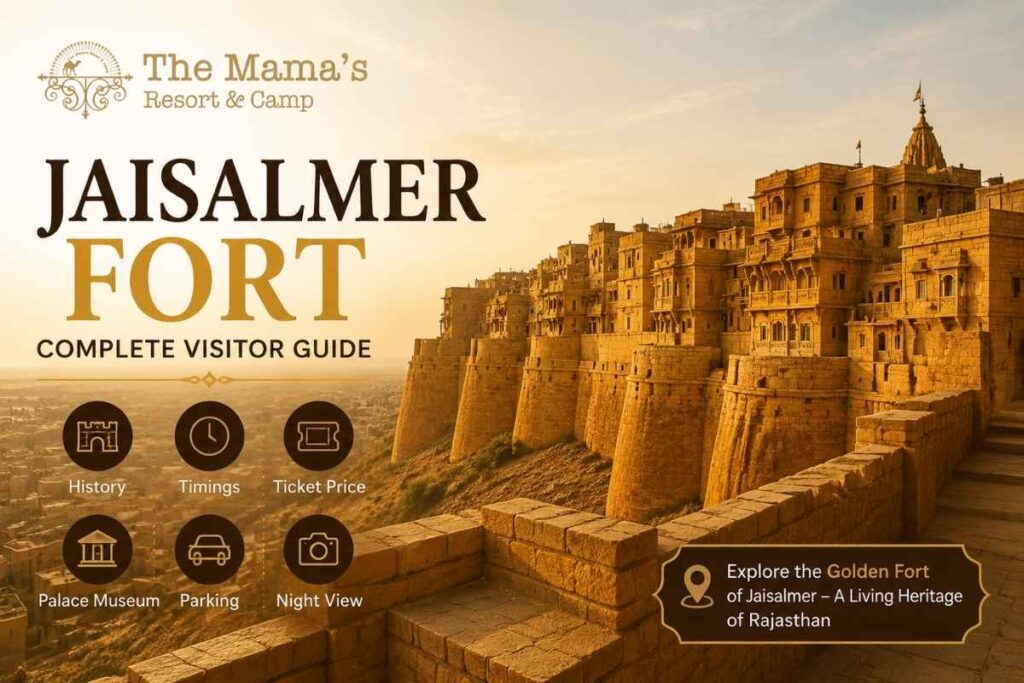
Standing proudly above the golden city, Jaisalmer Fort is one of the most famous landmarks in Rajasthan and a must-visit destination for anyone exploring the Thar Desert. Popularly known as the Golden Fort Jaisalmer, this magnificent fort is built from yellow sandstone that glows beautifully in the sunlight, giving it a golden appearance. Unlike most forts in India, Jaisalmer Fort is a living fort where thousands of people still live, work, and run shops, cafes, and temples within its ancient walls.
Recognized as part of the UNESCO World Heritage Site under the Hill Forts of Rajasthan, the fort reflects centuries of Rajput architecture, culture, and history. From grand palaces and beautifully carved Jain temples to bustling local markets and panoramic city views, every corner of the fort offers a unique experience for visitors.
In this complete Jaisalmer Fort information guide, you’ll learn about its fascinating history, opening hours, ticket prices, Palace Museum, parking facilities, the best time to visit, and what to explore inside Jaisalmer Fort. Whether you’re planning your first trip or returning to discover more, this guide will help you make the most of your visit to one of Rajasthan’s most iconic attractions.
Jaisalmer Fort History
The Jaisalmer Fort is one of the oldest and most remarkable forts in India. More than just a historical monument, it is a living heritage site where people continue to live, work, and preserve centuries-old traditions. Its rich past, stunning architecture, and strategic location have made it one of Rajasthan’s most visited attractions.
Who Built Jaisalmer Fort?
The fort was built in 1156 AD by Rawal Jaisal, a Rajput ruler of the Bhati dynasty. Before building the fort, his capital was located at Lodurva. However, due to repeated invasions and the need for a stronger defensive position, Rawal Jaisal chose Trikuta Hill as the site for his new capital.
The city of Jaisalmer was founded alongside the fort, and over time it became an important center for trade, culture, and administration in western Rajasthan.
Why Is It Called the Golden Fort?
The Jaisalmer Fort Name is often associated with its famous nickname, Golden Fort Jaisalmer or Sonar Quila. The fort is constructed using locally sourced yellow sandstone, which reflects the sunlight during the day and takes on a glowing golden color, especially at sunrise and sunset.
This golden appearance makes the fort look as though it is shining above the desert landscape, earning it the title of the “Golden Fort.” The nickname became even more popular after filmmaker Satyajit Ray’s famous novel and film Sonar Kella introduced the fort to audiences around the world.
A Stronghold of Rajput Heritage
Throughout its history, Jaisalmer Fort served as the royal residence of the Bhati Rajputs and played a vital role in protecting the kingdom from invading forces. The fort witnessed several battles, political alliances, and periods of prosperity that shaped the history of the region.
Within its massive walls, generations of rulers built magnificent palaces, beautifully carved Jain temples, residential houses, and public squares. Even today, many of these historic structures remain well preserved, allowing visitors to experience the architectural brilliance of medieval Rajasthan.
An Important Stop on Ancient Trade Routes
Long before modern transportation, Jaisalmer was a major trading hub connecting India with Central Asia, Persia, and the Middle East. Merchants traveling through the Thar Desert often stopped here to trade valuable goods such as silk, spices, precious stones, textiles, and dry fruits.
The wealth generated from these trade routes helped the rulers build impressive temples, grand havelis, and beautifully decorated buildings that still attract visitors from around the world.
UNESCO World Heritage Status
The historical and architectural significance of Jaisalmer Fort has been recognized globally. In 2013, it was included in the UNESCO World Heritage Site list as part of the Hill Forts of Rajasthan.
This recognition highlights the fort’s exceptional Rajput military architecture, unique desert construction techniques, and its rare distinction as one of the world’s few “living forts,” where thousands of residents continue to live inside its ancient walls.
Why Jaisalmer Fort Still Matters Today
Today, Jaisalmer Fort is much more than a historical monument. It is a vibrant community filled with homes, temples, shops, restaurants, and museums that offer visitors an authentic glimpse into Rajasthan’s living heritage. Walking through its narrow lanes feels like stepping back in time while still experiencing the energy of a thriving town.
Whether you’re interested in history, architecture, photography, or local culture, understanding the Jaisalmer Fort history adds a deeper appreciation to every corner you explore inside this magnificent Golden Fort.
Why Is Jaisalmer Fort Called the Golden Fort?
The Jaisalmer Fort Name is closely linked to its breathtaking golden appearance. Built entirely from yellow sandstone, the fort reflects sunlight throughout the day and glows with a rich golden hue, especially during sunrise and sunset. This stunning effect is why it is popularly known as the Golden Fort Jaisalmer or Sonar Quila, which means “Golden Fort” in Hindi. The fort’s towering walls, intricate carvings, grand gateways, and traditional Rajput architecture further enhance its beauty, making it one of the most photographed landmarks in Rajasthan. As the changing light transforms the color of the sandstone, the fort appears almost magical against the backdrop of the Thar Desert, creating an unforgettable sight for every visitor.
Inside Jaisalmer Fort – What to Explore
Stepping inside Jaisalmer Fort is like entering a living museum. Beyond its massive gates, you’ll find centuries-old palaces, beautifully carved temples, narrow lanes lined with local shops, rooftop cafés, and traditional homes where families have lived for generations. Whether you’re interested in history, architecture, photography, or shopping, there’s something to discover around every corner.
Here are the top attractions you shouldn’t miss during your visit.
Raj Mahal (Royal Palace)
Also known as the Royal Palace, Raj Mahal was once the residence of the Bhati Rajput rulers. Built over several centuries, the palace showcases the rich lifestyle of Jaisalmer’s royal family through its elegant architecture and beautifully decorated interiors.
Highlights of Raj Mahal:
- Intricately carved balconies and sandstone windows
- Grand courtyards and royal chambers
- Beautiful mirror work and decorative ceilings
- Panoramic views of Jaisalmer city from the upper floors
- Fine examples of traditional Rajput architecture
Today, the palace stands as one of the most visited attractions inside the fort and offers visitors a glimpse into the royal history of Jaisalmer.
Jaisalmer Fort Palace Museum
The Jaisalmer Fort Palace Museum is located within the Royal Palace complex and is one of the best places to understand the history of the Bhati dynasty. The museum preserves valuable collections that reflect the region’s royal heritage and cultural traditions.
What you’ll see inside the museum:
- Royal artifacts used by the kings and queens
- Ancient weapons, swords, shields, and armour
- Traditional paintings and historical manuscripts
- Royal costumes, jewellery, and decorative items
- Old photographs and exhibits showcasing the history of Jaisalmer
The museum provides detailed information about the rulers, architecture, and cultural significance of the fort, making it a worthwhile stop for history enthusiasts.
Visitor Information
- Entry is available with a separate museum ticket.
- Camera charges may apply for professional photography.
- It usually takes 30 to 45 minutes to explore the museum comfortably.
- Visiting in the morning is recommended to avoid crowds and enjoy a relaxed experience.
The Jaisalmer Fort Palace Museum is a must-visit attraction for anyone who wants to learn more about the royal legacy that shaped one of Rajasthan’s most iconic forts.
Jain Temples
The Jain Temples inside Jaisalmer Fort are among the finest examples of medieval architecture in Rajasthan. Built between the 12th and 16th centuries, these temples are dedicated to different Jain Tirthankaras and are admired for their detailed carvings, beautifully sculpted pillars, and peaceful atmosphere.
Highlights of the Jain Temples:
- Intricately carved yellow sandstone architecture
- Beautiful idols of Jain Tirthankaras
- Decorative ceilings and finely crafted pillars
- Ancient inscriptions and religious artwork
- Peaceful surroundings ideal for quiet exploration
Visitors should dress modestly and remove their footwear before entering the temples.
Lakshminath Temple
Located in the heart of the fort, the Lakshminath Temple is one of the oldest Hindu temples in Jaisalmer. Dedicated to Lord Vishnu and Goddess Lakshmi, the temple has been an important place of worship for centuries and continues to attract both devotees and tourists.
Why visit Lakshminath Temple?
- Historic temple with beautiful stone carvings
- Peaceful spiritual atmosphere
- Traditional Rajput-style architecture
- Regular religious ceremonies and prayers
- Located within walking distance of the Royal Palace and Jain Temples
Its historical importance and architectural beauty make it a worthwhile stop while exploring the fort.
Local Markets
Exploring the vibrant markets inside Jaisalmer Fort is one of the highlights of any visit. The narrow streets are lined with traditional shops selling authentic Rajasthani handicrafts, souvenirs, and handmade products crafted by local artisans.
Popular items to shop for:
- Handcrafted souvenirs and home décor
- Traditional leather bags, wallets, and footwear
- Silver jewellery with traditional Rajasthani designs
- Colourful wooden puppets and decorative items
- Embroidered textiles, scarves, quilts, and fabrics
Shopping Tips:
- Compare prices before making a purchase.
- Bargaining is common in many local shops.
- Carry cash, as some smaller stores may not accept digital payments.
- Buy from trusted artisans to ensure authentic handmade products.
The local markets offer a great opportunity to take home a piece of Rajasthan’s rich culture while supporting local craftsmen and family-run businesses.
Cafés & Rooftop Restaurants
While exploring inside Jaisalmer Fort, don’t miss the chance to relax at one of its rooftop cafés or restaurants. These spots offer delicious Rajasthani, Indian, and international dishes along with stunning views of the Golden City and the surrounding desert.
Why visit?
- Enjoy panoramic views of Jaisalmer.
- Try authentic Rajasthani cuisine.
- Capture beautiful sunrise and sunset photos.
- Relax after exploring the fort’s attractions.
Dining inside Jaisalmer Fort is a memorable experience that combines great food, historic surroundings, and spectacular city views.
Jaisalmer Fort Timings
Knowing the Jaisalmer Fort Timings can help you plan your visit and avoid the busiest hours. While the fort remains open throughout the day, individual attractions inside have their own operating hours. Visiting early in the morning or late afternoon is ideal for comfortable sightseeing and photography.
| Attraction | Timings |
|---|---|
| Jaisalmer Fort | Open 24 Hours (Public Access) |
| Palace Museum | 9:00 AM – 5:00 PM |
| Jain Temples | 8:00 AM – 12:00 PM & 3:00 PM – 5:00 PM |
| Local Shops & Markets | Approximately 10:00 AM – 8:00 PM |
Note: Timings may vary during festivals, public holidays, or due to maintenance. It’s always a good idea to confirm the latest timings before your visit.
Jaisalmer Fort Ticket Price & Entry Fee
There is no Jaisalmer Fort entry fee to enter the main fort, making it one of the few living forts in India that visitors can explore free of charge. However, attractions like the Palace Museum and Jain Temples have separate entry tickets. If you’re planning to stay nearby, check out our accommodation in Jaisalmer for a comfortable desert experience.
| Attraction | Indian | Foreign |
|---|---|---|
| Fort Entry | Free | Free |
| Palace Museum | ₹250 (Approx.) | ₹500 (Approx.) |
| Camera Charges | Extra (if applicable) | Extra (if applicable) |
The Jaisalmer Fort ticket price and Jaisalmer Fort tickets for museums may change over time. Before your visit, you can also explore The Mama’s Jaisalmer to plan your stay and desert activities.
Best Time to Visit Jaisalmer Fort
The best time to visit Jaisalmer Fort depends on the weather and the type of experience you’re looking for. While the fort is open throughout the year, the cooler months offer the most comfortable conditions for sightseeing.
Winter (October to March) – Best Season
Winter is the ideal time to explore the fort, with pleasant temperatures ranging from 10°C to 27°C. It’s perfect for walking through the narrow lanes, visiting temples, and enjoying rooftop views.
Summer (April to June)
Summers can be extremely hot, with temperatures often crossing 40°C. If you’re visiting during this season, plan your trip early in the morning or after 5 PM to avoid the afternoon heat.
Monsoon (July to September)
Jaisalmer receives limited rainfall, but the weather becomes slightly cooler and less crowded. It’s a good time for travelers looking for a peaceful experience.
Sunrise & Sunset
The fort looks its most beautiful during sunrise and sunset when the yellow sandstone glows in golden shades. These are also the best times for photography and enjoying panoramic views of the city.
Jaisalmer Fort Night View
The Jaisalmer Fort Night View is truly captivating. As evening falls, the fort is illuminated with warm golden lights that highlight its magnificent sandstone walls and intricate architecture. Although most attractions inside the fort close by evening, visitors can still admire its beauty from outside or enjoy the view from nearby cafés and viewpoints.
Why experience the fort at night?
- See the beautifully illuminated Golden Fort against the night sky.
- Capture stunning long-exposure and cityscape photographs.
- Enjoy panoramic views from rooftop cafés near the fort.
- Experience a quieter and more peaceful atmosphere after sunset.
Is night visit allowed?
- Public streets inside the living fort remain accessible, but museums, temples, and most attractions close in the evening.
- For the best Jaisalmer Fort Night View, visit around sunset and stay until the lights come on for an unforgettable experience.
Jaisalmer Fort Parking
Since vehicles are not allowed inside the fort, visitors must use the designated Jaisalmer Fort parking areas located near the main entrance. From the parking area, it’s just a short walk to reach the fort gates.
| Parking Details | Information |
|---|---|
| Car Parking | Available near the fort entrance |
| Two-Wheeler Parking | Available in designated parking areas |
| Parking Charges | Nominal fee (varies by vehicle type) |
| Walking Distance | Approximately 5–10 minutes to the main gate |
Parking Tips:
- Arrive early during the tourist season to secure a parking spot.
- Carry some cash, as smaller parking facilities may not accept digital payments.
- Wear comfortable footwear, as you’ll be walking on stone pathways inside the fort.
- Avoid bringing large vehicles close to the fort during peak hours due to narrow roads and traffic congestion.
How to Reach Jaisalmer Fort
Reaching Jaisalmer Fort is convenient, as it is well connected by air, rail, and road. Once you arrive in the city, local transport is easily available to take you to the fort.
By Air
The nearest airport is Jaisalmer Airport, located about 13 km from the fort. Taxis and cabs are available outside the airport, and the journey usually takes 20–30 minutes.
By Train
Jaisalmer Railway Station is approximately 2.5 km from the fort. You can reach the fort in 10–15 minutes by taxi, auto-rickshaw, or cab.
By Road
Jaisalmer is well connected to major cities like Jaipur, Jodhpur, Bikaner, and Udaipur through national and state highways. Both private taxis and Rajasthan State Road Transport buses operate regular services.
Local Transport
Getting around the city is easy with:
- Auto-rickshaws
- Taxis and cab services
- E-rickshaws
- Rental bikes and scooters
| Starting Point | Approximate Distance to Jaisalmer Fort |
|---|---|
| Jaisalmer Railway Station | 2.5 km |
| Jaisalmer Airport | 13 km |
| Jaisalmer Bus Stand | 1.5 km |
For a hassle-free trip, consider staying at The Mama’s Jaisalmer, which offers comfortable accommodation and easy access to Jaisalmer Fort and other popular attractions.
Best Things to Do Inside Jaisalmer Fort
There is much more to inside Jaisalmer Fort than simply admiring its architecture. From exploring royal palaces and ancient temples to shopping in vibrant markets and enjoying panoramic city views, the fort offers memorable experiences for every traveler.
1. Visit the Palace Museum
Explore the Royal Palace and Palace Museum to see royal artifacts, historic weapons, paintings, costumes, and exhibits that showcase the rich history of the Bhati dynasty.
2. Explore the Jain Temples
Admire the beautifully carved Jain Temples, known for their intricate sandstone architecture, peaceful atmosphere, and centuries-old craftsmanship.
3. Take a Heritage Walk
Walk through the fort’s narrow lanes to discover historic gateways, traditional houses, hidden courtyards, and the daily life of one of the world’s few living forts.
4. Relax at Rooftop Cafés
Enjoy authentic Rajasthani food or a cup of tea while taking in breathtaking views of the Golden City from a rooftop café.
5. Shop for Local Handicrafts
Browse local markets for handcrafted souvenirs, leather products, silver jewellery, colourful puppets, embroidered textiles, and traditional Rajasthani gifts.
6. Capture Beautiful Photographs
Photograph the golden sandstone architecture, carved balconies, temples, bustling streets, and panoramic city views that make the fort a paradise for photographers.
7. Watch the Sunset
End your visit by watching the sunset from one of the fort’s viewpoints or nearby rooftop cafés, where the changing light transforms the sandstone into a brilliant golden glow.
Photography Tips for Jaisalmer Fort
Jaisalmer Fort is one of Rajasthan’s most photogenic landmarks. Whether you’re using a smartphone or a professional camera, visiting at the right time and choosing the best viewpoints can help you capture stunning photos.
Photography Tips:
- Best Camera Spots: Capture panoramic views from rooftop cafés, the fort’s entrance, palace terraces, and nearby viewpoints around the city.
- Drone Rules: Drone photography is generally restricted around the fort and heritage areas. Always check local regulations and obtain permission if required.
- Morning vs Evening: Early morning offers soft light and fewer crowds, while sunset creates the famous golden glow that makes the fort look spectacular.
- Best Lenses: A wide-angle lens is ideal for architecture and cityscapes, while a zoom lens works well for detailed carvings, temples, and balconies.
With the right timing and equipment, you’ll capture unforgettable memories of Jaisalmer Fort.
Nearby Attractions
After exploring Jaisalmer Fort, there are several nearby attractions that showcase the city’s rich history, culture, and desert landscapes. From historic havelis to peaceful lakes and thrilling desert adventures, these places are worth adding to your itinerary.
| Attraction | Distance from Jaisalmer Fort | Why Visit |
|---|---|---|
| Patwon Ki Haveli | Approx. 700 m | Famous for its intricate carvings and historic architecture. |
| Nathmal Ki Haveli | Approx. 600 m | A beautiful haveli known for its unique blend of Rajput and Islamic architecture. |
| Salim Singh Ki Haveli | Approx. 500 m | Popular for its distinctive peacock-shaped roof and detailed stonework. |
| Gadisar Lake | Approx. 1.5 km | A peaceful lake ideal for boating, photography, and sunset views. |
| Bada Bagh | Approx. 6 km | Historic royal cenotaphs offering stunning sunrise and sunset photography. |
| Khuri Desert | Approx. 50 km | Enjoy camel safaris, jeep safaris, cultural performances, and a peaceful desert experience. |
| Sam Sand Dunes | Approx. 42 km | One of the most popular places to experience sand dunes, desert camping, and adventure activities. |
If you’re planning a Desert Safari after your fort visit, staying at The Mama’s Jaisalmer in Khuri is a great choice. The property offers luxury tent accommodation, camel and jeep safaris, cultural evenings, and authentic Rajasthani hospitality, making it the perfect way to complete your Jaisalmer trip.
Where to Stay Near Jaisalmer Fort
After a day of exploring Jaisalmer Fort, staying away from the busy city center offers a more relaxing and authentic desert experience. Located in the peaceful village of Khuri, The Mama’s Jaisalmer is an excellent choice for families, couples, and groups looking to experience the beauty of the Thar Desert while remaining within easy driving distance of the fort and other popular attractions.
Why Choose The Mama’s Jaisalmer?
- Peaceful location away from the city crowds
- Spacious Luxury Swiss Tents with modern amenities
- Traditional Rajasthani cultural evenings with folk music and dance
- Exciting Camel Safari and Jeep Safari experiences
- Authentic Rajasthani cuisine prepared with local flavours
- Family-friendly atmosphere with warm hospitality
- Easy access to Jaisalmer Fort, Gadisar Lake, Bada Bagh, and other attractions
Whether you’re planning a weekend getaway or a longer holiday, The Mama’s Jaisalmer combines comfortable accommodation, desert adventures, and genuine Rajasthani hospitality to make your trip truly memorable.
Suggested One-Day Itinerary
If you have just one day in Jaisalmer, this itinerary will help you cover the city’s major attractions while leaving enough time to enjoy the desert in the evening.
| Time | Activity |
|---|---|
| 8:00 AM | Reach Jaisalmer Fort and explore its historic streets before the crowds arrive. |
| 9:00 AM | Visit the Palace Museum to learn about the royal history of Jaisalmer. |
| 10:30 AM | Explore the beautifully carved Jain Temples and Lakshminath Temple. |
| 12:00 PM | Shop for handicrafts, leather products, silver jewellery, and traditional souvenirs in the local markets. |
| 1:30 PM | Enjoy lunch at a rooftop café with panoramic views of the Golden City. |
| 3:00 PM | Visit nearby attractions like Patwon Ki Haveli or Nathmal Ki Haveli. |
| 5:30 PM | Watch the sunset as Jaisalmer Fort glows in golden hues. |
| Evening | Check in at The Mama’s Jaisalmer to enjoy a cultural evening with folk music, traditional dance performances, authentic Rajasthani dinner, and a peaceful stay in the desert. |
This itinerary offers a perfect balance of history, culture, local shopping, sightseeing, and an authentic desert experience, making the most of your day in Jaisalmer.
Visitor Tips
A little planning can make your visit to Jaisalmer Fort more comfortable and enjoyable. Keep these practical tips in mind before you explore the fort.
- Wear comfortable shoes as you’ll be walking on uneven stone streets and climbing steps.
- Carry a water bottle, especially if you’re visiting during the warmer months.
- Respect religious places by dressing modestly and removing your footwear before entering temples.
- Hire a local guide if you’d like to learn about the fort’s history, architecture, and hidden stories.
- Start your visit early in the morning to avoid crowds and enjoy pleasant weather.
- Carry some cash, as small shops and local vendors may not always accept digital payments.
- Avoid the peak afternoon heat, particularly between April and June, by planning sightseeing in the morning or late afternoon.
Following these simple tips will help you enjoy a safe, comfortable, and memorable visit to Jaisalmer Fort.
Frequently Asked Questions (FAQs)
1. What is the entry fee for Jaisalmer Fort?
There is no entry fee to visit the main premises of Jaisalmer Fort. Visitors can walk through its streets, explore local markets, and admire the architecture free of charge. However, attractions inside the fort, such as the Jaisalmer Fort Palace Museum and Jain temples, may have separate entry charges. It’s a good idea to check the latest ticket prices before your visit.
2. What are Jaisalmer Fort timings?
The fort remains open throughout the day, and visitors can usually explore it from early morning until evening. Most museums, temples, and shops inside the fort operate between 9:00 AM and 5:00 PM, although timings may vary slightly depending on the season and the attraction.
3. Can we visit Jaisalmer Fort at night?
Yes, you can enjoy the Jaisalmer Fort night view from outside after sunset. The illuminated fort looks spectacular against the desert sky and is one of the best photography spots in the city. While the streets inside the fort remain accessible, many museums, temples, and shops close in the evening.
4. Is parking available near Jaisalmer Fort?
Yes, Jaisalmer Fort parking is available near the base of the fort. Since vehicles are generally not allowed inside the narrow lanes, visitors need to park outside and walk uphill or hire an auto-rickshaw to reach the entrance. During weekends and the tourist season, arriving early is recommended to find a convenient parking space.
5. What is inside Jaisalmer Fort?
There are plenty of fascinating attractions inside Jaisalmer Fort, including the Raj Mahal (Royal Palace), the Palace Museum, beautifully carved Jain temples, Lakshminath Temple, traditional houses, rooftop cafés, handicraft shops, restaurants, and narrow heritage streets that reflect the city’s rich culture and history.
6. Is the Jaisalmer Fort Palace Museum worth visiting?
Yes, the Jaisalmer Fort Palace Museum is one of the fort’s main attractions. It showcases royal artifacts, weapons, paintings, costumes, manuscripts, and historical exhibits that provide insight into the lives of the Bhati rulers and the heritage of Jaisalmer. It is especially recommended for visitors interested in history and architecture.
7. How much time is needed to explore Jaisalmer Fort?
Most visitors spend 3 to 4 hours exploring the fort comfortably. If you plan to visit the Palace Museum, Jain temples, local markets, enjoy rooftop dining, and take photographs, you may want to set aside half a day for a relaxed experience.
8. Why is it called the Golden Fort?
The fort is popularly known as the Golden Fort Jaisalmer because it is built from yellow sandstone that shines with a golden glow when sunlight falls on it. This unique appearance, especially during sunrise and sunset, has earned it the nickname “Sonar Quila” or the Golden Fort.
9. Can tourists stay inside Jaisalmer Fort?
Yes, tourists can stay inside the fort as several heritage hotels, guesthouses, and homestays operate within its walls. However, many travelers also prefer staying at luxury desert camps outside the city, such as The Mama’s Jaisalmer, to enjoy cultural performances, camel safaris, jeep safaris, and the peaceful beauty of the Thar Desert after exploring the fort.
10. Which is the best season to visit Jaisalmer Fort?
The best time to visit Jaisalmer Fort is between October and March, when the weather is pleasant and ideal for sightseeing. Winter offers comfortable temperatures for exploring the fort, visiting nearby attractions, and enjoying desert activities. If possible, plan your visit during sunrise or late afternoon for cooler weather and the best views of the Golden Fort.
Conclusion
A visit to Jaisalmer Fort is much more than exploring an ancient monument. From its fascinating history and remarkable Rajput architecture to the impressive Palace Museum, beautifully carved temples, vibrant local markets, and breathtaking night views, the fort offers an unforgettable experience for every traveler. With the right travel information, including timings, ticket prices, parking details, and the best time to visit, you can plan your trip with ease and make the most of your time in the Golden City.
