Jaisalmer Fort: History, Architecture, Timings & Complete Guide to the Golden Fort of Rajasthan

Jaisalmer Desert Camping & Safari Guide
August 3, 2026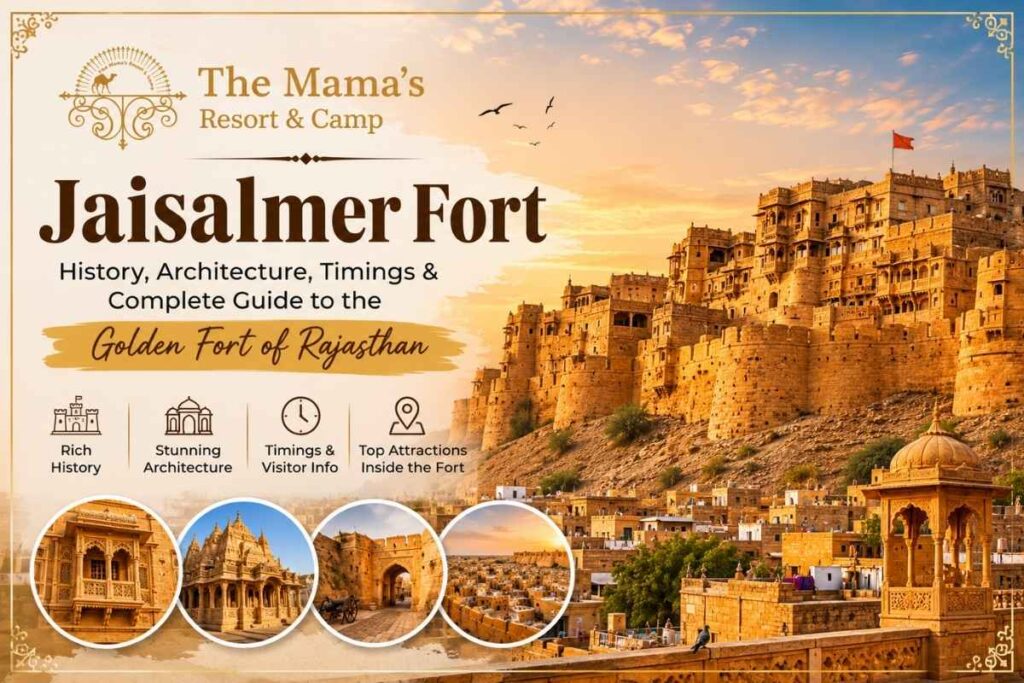
Introduction
Standing proudly above the golden skyline of Jaisalmer, Jaisalmer Fort is one of the most iconic landmarks in Rajasthan. Commonly known as the Golden Fort Jaisalmer, this magnificent fort was built in 1156 AD by Rawal Jaisal and continues to captivate visitors with its rich history, stunning architecture, and vibrant culture. Constructed entirely from yellow sandstone, the fort glows with a golden hue during sunrise and sunset, earning it the name Sonar Fort or the Golden Fort.
What makes the Jaisalmer Fort truly special is that it remains a living heritage site. Unlike most historic forts in India, thousands of people still live within its ancient walls, making it the famous Living Fort of Rajasthan. The narrow lanes of the fort are lined with traditional homes, temples, handicraft shops, cafés, and heritage buildings that offer a glimpse into the everyday life of the local community.
Recognized as part of the UNESCO World Heritage-listed Hill Forts of Rajasthan, Jaisalmer Fort represents centuries of Rajput history, culture, and craftsmanship. Whether you are interested in history, architecture, photography, or cultural experiences, the fort offers something for every traveler. If you are planning to explore this historic marvel, you can also stay in a traditional desert resort in Jaisalmer and experience the authentic charm of Rajasthan beyond the fort walls.
Why is Jaisalmer Fort Called Sonar Fort or Sonargarh Fort?
Many travelers know Jaisalmer Fort by its popular names, Sonar Fort Jaisalmer and Sonargarh Fort. The word “Sonar” means gold, and the fort earned this name because of its stunning golden appearance. Built entirely from yellow sandstone, the fort reflects sunlight in a way that makes it appear as if it is covered in gold, especially during sunrise and sunset.
As the first rays of the sun touch the massive walls and bastions, the fort glows with warm golden shades that blend beautifully with the surrounding Thar Desert. This unique visual effect has made the Golden Fort Jaisalmer one of the most photographed landmarks in Rajasthan. During the evening, the setting sun creates another spectacular display, turning the fort into a glowing golden masterpiece against the desert sky.
The name Sonargarh Fort combines two words: “Sonar,” meaning gold, and “Garh,” meaning fort. Together, they perfectly describe the fort’s distinctive appearance and its importance as a royal stronghold. Over the centuries, locals, historians, and travelers have used these names interchangeably while referring to the Jaisalmer Fort.
Beyond its golden beauty, the fort is admired for its impressive Rajput architecture, intricate carvings, historic temples, and vibrant streets. Its unique color, combined with its rich history and cultural significance, continues to make Sonar Fort Jaisalmer one of the most recognizable and celebrated forts in India.
Why Jaisalmer Fort is Known as the Living Fort of Rajasthan
One of the most unique features of Jaisalmer Fort is that it is still inhabited, which is why it is widely known as the Living Fort of Rajasthan. While most historic forts in India function only as monuments or museums, Jaisalmer Fort continues to serve as a home for local residents who have lived within its walls for generations.
It is estimated that several thousand people live inside the fort, making it one of the few living forts in the world. The narrow streets are filled with traditional houses, family-run businesses, handicraft shops, cafés, guesthouses, and small hotels that operate alongside centuries-old heritage structures. Visitors can experience not only the fort’s history but also the daily life and culture of the people who call it home.
The fort is also home to beautiful Jain temples, Hindu temples, and historic buildings that remain active places of worship and community gathering. Walking through its winding lanes offers a rare opportunity to see how ancient architecture and modern life coexist within the same space.
This living heritage is what sets the Jaisalmer Fort apart from many other forts in Rajasthan. Rather than being frozen in time, it continues to evolve while preserving its cultural identity and historical character. The sounds of local markets, temple bells, traditional music, and everyday activities create an atmosphere that feels authentic and vibrant.
For travelers seeking more than just a sightseeing experience, the Living Fort of Rajasthan offers a chance to connect with the region’s heritage in a meaningful way. Its blend of history, culture, architecture, and community life makes Jaisalmer Fort one of the most fascinating destinations in India.
Architecture of the Golden Fort
The architecture of Jaisalmer Fort is a remarkable example of Rajput craftsmanship, defensive planning, and desert adaptation. Built in 1156 AD on Trikuta Hill, the fort combines strength, beauty, and functionality in a way that has allowed it to survive for more than eight centuries. The use of locally sourced yellow sandstone, intricate carvings, and strategic fortifications makes the Golden Fort one of the finest architectural wonders in Rajasthan.
Massive Fortification Walls
One of the first things visitors notice about Jaisalmer Fort is its impressive defensive structure. The fort is surrounded by massive walls that rise dramatically above the city, providing both protection and panoramic views of the surrounding desert. Built on a hilltop, these walls were designed to make it difficult for invading armies to penetrate the fort’s defenses. The elevated position also allowed soldiers to monitor trade routes and approaching enemies from a distance.
99 Bastions of Jaisalmer Fort
A distinctive feature of the fort is its 99 bastions, which strengthen the outer defenses of the structure. Most of these bastions were added during the 17th century to improve the fort’s security. These circular towers not only served military purposes but also contribute to the fort’s iconic skyline. When viewed from afar, the bastions create a majestic silhouette that enhances the beauty of the Golden Fort Jaisalmer.
Raj Mahal Palace
Located within the fort complex, the Raj Mahal Palace served as the residence of Jaisalmer’s royal family. The palace showcases beautiful balconies, courtyards, decorative windows, and finely carved stonework. Its architecture reflects the grandeur of Rajput royalty while maintaining practical features suited to the desert climate. Today, the palace stands as an important reminder of the kingdom’s royal heritage and attracts visitors interested in Rajasthan’s history.
Intricate Rajput Architecture
The fort is filled with examples of traditional Rajput architecture, known for its detailed craftsmanship and artistic excellence. Ornately carved facades, decorative jharokhas (balconies), elegant gateways, and beautifully designed courtyards can be seen throughout the fort. Every structure reflects the skills of local artisans who transformed sandstone into works of art. These architectural details give the fort its distinctive character and cultural significance.
Yellow Sandstone Construction
The most defining feature of the Jaisalmer Fort is its construction using yellow sandstone. This locally available stone not only provided durability but also gave the fort its famous golden appearance. Throughout the day, the sandstone changes color depending on the sunlight, creating shades ranging from honey gold to deep amber. This unique quality is the reason the fort is known worldwide as the Golden Fort or Sonar Fort Jaisalmer.
Together, these architectural elements make Jaisalmer Fort much more than a historic monument. They showcase centuries of engineering, artistry, and cultural heritage, helping the fort remain one of Rajasthan’s most admired landmarks.
Top Attractions Inside Jaisalmer Fort
A visit to the Jaisalmer Fort is much more than exploring ancient walls and historic gateways. The fort is home to royal palaces, centuries-old temples, scenic viewpoints, and vibrant markets that showcase the rich heritage of Rajasthan. As you walk through the narrow sandstone lanes, you’ll discover some of the most fascinating attractions inside Jaisalmer Fort, each offering a unique glimpse into its history and culture.
Raj Mahal Palace
The Raj Mahal Palace was once the residence of the rulers of Jaisalmer and remains one of the most important landmarks inside the fort. Built over several centuries, the palace features beautifully carved balconies, decorative arches, royal courtyards, and historic chambers. Visitors can explore sections of the palace that display artifacts, paintings, and architectural details that reflect the grandeur of Rajput royalty. The upper floors also offer excellent views of Jaisalmer city and the surrounding desert landscape.
Jain Temples
Among the most impressive attractions inside the fort are the ancient Jain Temples, which date back to the 12th and 15th centuries. Dedicated to various Jain Tirthankaras, these temples are renowned for their extraordinary stone carvings, detailed sculptures, and intricate architectural work. Every pillar, ceiling, and wall showcases remarkable craftsmanship, making the temples a must-visit destination for history lovers, architecture enthusiasts, and spiritual travelers.
Laxminath Temple
The Laxminath Temple is one of the oldest Hindu temples within the Jaisalmer Fort. Dedicated to Lord Vishnu and Goddess Lakshmi, the temple has been an important place of worship for centuries. Its beautifully decorated entrance, carved pillars, and peaceful atmosphere attract both devotees and tourists. The temple offers a glimpse into the religious traditions that have been preserved within the fort for generations.
Rooftop Viewpoints
One of the best experiences inside Jaisalmer Fort is enjoying the panoramic views from its rooftop viewpoints. Several cafés, terraces, and viewing spots provide breathtaking views of the Golden City, its narrow streets, historic havelis, and the vast Thar Desert beyond. Sunrise and sunset are particularly popular times to visit, as the golden sandstone buildings glow beautifully in the changing light.
Local Markets
The bustling local markets inside the fort add life and color to its historic surroundings. Visitors can browse a variety of shops selling traditional Rajasthani handicrafts, embroidered textiles, leather goods, silver jewelry, miniature paintings, and souvenirs. These family-run businesses have been part of the fort’s culture for generations and offer a chance to support local artisans while taking home a piece of Jaisalmer’s heritage.
Together, these attractions make exploring inside Jaisalmer Fort an unforgettable experience. From royal palaces and sacred temples to scenic viewpoints and lively markets, every corner of the fort reveals a different chapter of its rich history and living culture.
Best Time to Visit Jaisalmer Fort
The best time to visit Jaisalmer Fort is between October and March, when the weather is pleasant and ideal for sightseeing. During these months, daytime temperatures are comfortable, making it easier to explore the fort’s historic streets, temples, palaces, and viewpoints without the intense heat that Rajasthan experiences during summer.
Winter Weather in Jaisalmer
Winter is considered the peak tourist season in Jaisalmer. From November to February, temperatures generally range between 8°C and 25°C, creating perfect conditions for exploring outdoor attractions. The cooler climate allows visitors to spend more time inside the fort, enjoy rooftop views of the Golden City, and wander through the local markets at a relaxed pace.
The winter months are also ideal for photography. The clear desert skies and golden sunlight enhance the beauty of the Golden Fort Jaisalmer, making sunrise and sunset particularly spectacular.
Festival Season and Cultural Experiences
Visiting Jaisalmer during the festival season offers an even more memorable experience. The city comes alive with cultural performances, traditional music, folk dances, camel shows, and local celebrations that showcase Rajasthan’s vibrant heritage. One of the most popular events is the Jaisalmer Desert Festival, usually held during February, attracting visitors from across India and around the world.
During this time, travelers can combine their fort visit with desert adventures, cultural programs, and local sightseeing. If you’re planning a longer stay, explore more things to do in Jaisalmer to make the most of your trip and discover the unique attractions that make this desert city so special.
Months to Avoid
Although Jaisalmer Fort remains open throughout the year, the summer months from April to June can be extremely hot, with temperatures often exceeding 40°C. Sightseeing during the daytime may become uncomfortable due to the harsh desert climate. For a more enjoyable experience, it is recommended to visit during the cooler months when the weather is favorable and outdoor exploration is more comfortable.
Whether you are interested in history, architecture, photography, or cultural experiences, planning your visit between October and March will help you experience the Jaisalmer Fort at its very best.
Jaisalmer Fort Timings and Entry Information
Before planning your visit, it is helpful to know the latest Jaisalmer Fort timings and visitor information. The fort remains open throughout the year and welcomes thousands of travelers who come to explore its rich history, temples, palaces, and vibrant streets.
Jaisalmer Fort Timings
The fort is generally open to visitors from 8:00 AM to 6:00 PM every day. Early morning and late afternoon are considered the best times to visit, as the weather is more pleasant and the golden sandstone shines beautifully in natural light.
Museum Timings
The palace museum and heritage sections within the fort typically operate during daytime hours, usually between 9:00 AM and 5:00 PM. Visitors interested in learning about the history of Jaisalmer’s royal family, ancient artifacts, and local culture should allocate extra time for exploring these areas.
Entry Tickets
Entry to the fort itself is generally free, as it is a living heritage site with residential and commercial areas. However, separate tickets may be required for attractions such as:
- Raj Mahal Palace Museum
- Jain Temples
- Heritage exhibitions
- Special cultural attractions
Ticket prices may vary for Indian and international visitors, so it is advisable to check current rates before your visit.
Photography and Videography
Photography is permitted in most outdoor areas of the fort, allowing visitors to capture stunning views of the Golden City and historic architecture. Some museums, temples, and heritage buildings may charge additional fees for photography or videography. Always check local guidelines before taking pictures inside religious or heritage sites.
Visitor Tips
- Visit early in the morning to avoid crowds.
- Wear comfortable footwear, as the fort involves considerable walking.
- Carry water, especially during warmer months.
- Respect local residents, as the fort is still home to a living community.
- Keep some time aside for exploring the hidden lanes, cafés, and handicraft shops inside the fort.
How to Reach Jaisalmer Fort
Located in the heart of Jaisalmer city, the Jaisalmer Fort is easily accessible by air, rail, and road. Whether you are traveling from another city in Rajasthan or from elsewhere in India, reaching the fort is convenient.
By Air
The nearest airport is Jaisalmer Airport, located approximately 12–15 kilometers from the fort. Direct and seasonal flights connect Jaisalmer with major cities such as Delhi, Jaipur, Ahmedabad, and Mumbai. From the airport, taxis and private cabs are readily available to reach the fort and nearby accommodations.
By Train
Jaisalmer Railway Station is well connected to major cities including Delhi, Jaipur, Jodhpur, and other parts of Rajasthan. The railway station is located about 2 kilometers from the fort, making it a quick taxi or auto-rickshaw ride away. Train travel is one of the most popular and scenic ways to reach Jaisalmer.
By Road
Jaisalmer enjoys excellent road connectivity with major cities across Rajasthan and neighboring states.
Approximate driving distances:
- Jodhpur to Jaisalmer – 285 km
- Jaipur to Jaisalmer – 560 km
- Udaipur to Jaisalmer – 490 km
- Bikaner to Jaisalmer – 330 km
Regular buses, luxury coaches, and private taxis operate between these destinations and Jaisalmer.
Local Travel Tips
- Auto-rickshaws and taxis are the easiest way to reach the fort from the station or airport.
- Since vehicle access inside the fort is restricted in many areas, be prepared to explore on foot.
- Visit during the morning or evening for a more comfortable walking experience.
- Combine your fort visit with nearby attractions such as Patwon Ki Haveli, Gadisar Lake, and local markets to make the most of your day in Jaisalmer.
With multiple transport options and convenient access from across Rajasthan, visiting Jaisalmer Fort is easy for both domestic and international travelers.
Interesting Facts About Jaisalmer Fort
Jaisalmer Fort is not only one of Rajasthan’s most famous landmarks but also a fascinating monument filled with history, culture, and architectural achievements. Here are some interesting facts about this iconic Golden Fort that make it unique among India’s historic forts.
It is a UNESCO World Heritage Site
Jaisalmer Fort is recognized as part of the UNESCO-listed Hill Forts of Rajasthan. This prestigious recognition highlights its historical importance, exceptional architecture, and contribution to Rajasthan’s cultural heritage.
Built More Than 850 Years Ago
The fort was built in 1156 AD by Rawal Jaisal, the founder of Jaisalmer. Despite centuries of changing rulers, invasions, and environmental challenges, the fort continues to stand proudly over the city.
One of the Largest Living Forts in the World
Unlike many historic forts that serve only as tourist attractions, Jaisalmer Fort remains a thriving residential community. Thousands of people continue to live, work, and worship within its walls, earning it the title of the Living Fort of Rajasthan.
Home to 99 Bastions
One of the fort’s most impressive features is its 99 bastions, which strengthen its defensive structure. These massive sandstone towers create the fort’s distinctive skyline and showcase the military engineering skills of the Rajput era.
The Fort Changes Color Throughout the Day
The yellow sandstone used in the fort’s construction reflects sunlight differently throughout the day. During sunrise and sunset, the structure glows in golden shades, which is why it is known worldwide as the Golden Fort or Sonar Fort Jaisalmer.
It Was an Important Trade Center
For centuries, Jaisalmer was a key stop along ancient trade routes connecting India with Central Asia and the Middle East. Merchants carrying silk, spices, precious stones, and textiles helped the kingdom prosper and contributed to the fort’s growth.
Featured in Films and Documentaries
The fort’s dramatic desert setting and historic architecture have made it a popular location for films, television programs, travel documentaries, and photography projects. Its unique appearance continues to attract filmmakers and content creators from around the world.
A City Within a Fort
Inside Jaisalmer Fort, visitors will find homes, temples, shops, restaurants, guesthouses, and cultural attractions. This vibrant community atmosphere makes the fort feel more like a living city than a traditional monument.
Frequently Asked Questions
Is Jaisalmer Fort a UNESCO World Heritage Site?
Yes. Jaisalmer Fort is part of the UNESCO-listed Hill Forts of Rajasthan, recognized for its historical significance, architecture, and cultural heritage.
Why is Jaisalmer Fort called the Golden Fort?
The fort is built from yellow sandstone that reflects sunlight beautifully, creating a golden appearance. This is why it is popularly known as the Golden Fort Jaisalmer or Sonar Fort.
Who built Jaisalmer Fort?
Jaisalmer Fort was built by Rawal Jaisal, the Bhati Rajput ruler who founded the city of Jaisalmer in 1156 AD.
How old is Jaisalmer Fort?
The fort was constructed in 1156 AD, making it more than 850 years old and one of the oldest continuously inhabited forts in India.
Why is it known as the Living Fort of Rajasthan?
Jaisalmer Fort is known as the Living Fort of Rajasthan because thousands of people still live inside the fort. It contains homes, temples, shops, hotels, and local businesses that remain active today.
What is the best time to visit Jaisalmer Fort?
The best time to visit is between October and March when the weather is pleasant and ideal for sightseeing and outdoor activities.
Can tourists stay inside Jaisalmer Fort?
Yes. Several heritage guesthouses and boutique hotels operate inside the fort. Visitors can also choose accommodations outside the fort for a quieter stay and easy access to desert experiences.
What are the famous attractions inside Jaisalmer Fort?
Some of the most popular attractions include Raj Mahal Palace, Jain Temples, Laxminath Temple, rooftop viewpoints, local markets, heritage buildings, and traditional Rajasthani cafés.